Process improvement

Process improvement is a systematic way to work more efficiently. You reduce waste, prevent errors, and improve outcomes—without working more. In this short guide, you’ll learn what process improvement means, why it matters, which methodologies to consider, and how to run a practical improvement cycle. You’ll also see real process improvement examples and how tools like Gluu can help you document, run, and continuously improve processes.
Let’s start defining what it is.
What Is Process Improvement?
Process improvement is a disciplined approach to optimizing how work gets done. In other words, you examine a business process, find friction, and redesign the steps so you can deliver more value with less effort. That typically means fewer handoffs, fewer mistakes, shorter cycle times, and clearer ownership.
However, process improvement is not a one-time “fix.” The best teams treat it as an ongoing habit. They make small improvements often, measure impact, and standardize what works. Over time, that steady pace creates a durable competitive advantage through hundreds of small improvements.
Business Process Improvement
You’ll often see two terms used interchangeably: process improvement and business process improvement. The difference is mostly scope.
- Process improvement can apply to any process, including team-level workflows like invoicing, or incident handling.
- Business process improvement usually targets end-to-end, cross-functional processes that influence core performance—think order-to-cash, procure-to-pay, or hire-to-retire.
Even so, the logic stays the same. You clarify the goal, understand the current way of working, and improve the flow so your organization can deliver outcomes more predictably.
Why Process Improvement Matters
Processes – or a lack thereof! – quietly impact your cost-to-serve, customer experience, and employee satisfaction. When a process breaks, people compensate with fire fighting. That feels productive in the moment, yet it drains capacity and increases risk. Process improvement flips the script: you fix the system instead of relying on workarounds.
“A bad system will beat a good person every time.” — W. Edwards Deming
Here are common benefits you can expect:
- Less waste in time and material.
- More consistent quality because you build in checks where they matter and remove ambiguity.
- Faster response times by removing bottle necks.
- Higher productivity since people spend less time searching, waiting, and correcting.
- Stronger engagement when teams help shape “how we work” and see their ideas implemented.
To make this measurable, define a few KPIs that match your goal—cycle time, error rate, rework percentage, customer satisfaction, or cost per case. Then track them consistently so you can see whether the change actually helps.
Continuous Improvement Process
A continuous improvement process is the habit of making small, regular improvements instead of waiting for a big transformation project. That matters because work changes. Tools change. Regulations change. Customer expectations change. If your processes stay static, performance slowly erodes.
Continuous improvement works best when you make it easy for the people doing the work to contribute. For example, a frontline employee should be able to flag a bottleneck, propose a change, and see feedback from the process owner—without a month of meetings.
If you want to learn more about the ‘continuous’ part I suggest you read this post: The Case for Continuous Improvement
Top Process Improvement Methodologies
Methodologies give you structure. They also give teams a shared language, which reduces confusion and speeds up decisions. Still, you don’t need to be “pure” about any framework. Pick what fits your context, then adapt.
“Without standards, there can be no improvement.” — Taiichi Ohno
Lean
Lean focuses on maximizing customer value while eliminating waste. You look for delays, unnecessary approvals, duplicated work, and handoffs that add complexity. Then you redesign the flow so value moves faster.
Six Sigma (DMAIC)
Six Sigma is a data-driven approach to reduce defects and variation. The DMAIC cycle (Define, Measure, Analyze, Improve, Control) helps you move from symptoms to root causes—especially when quality and consistency matter.
Kaizen
Kaizen is part of the Lean philosophy and means “change for the better.” It emphasizes incremental improvements driven by the people closest to the work. It’s ideal when you want momentum, learning, and a strong improvement culture.
Total Quality Management (TQM)
TQM is a company-wide approach where quality becomes everyone’s responsibility. It connects leadership priorities, customer needs, and continuous improvement so quality is not “someone else’s job.”
Business Process Reengineering (BPR)
BPR is a more radical approach. Instead of improving step-by-step, you redesign a process from scratch. Use it when incremental changes won’t solve the problem—yet be careful, because major redesigns require strong change management. Learn more in our guide to business process reengineering.
Want to go deeper in this? Read this post: Top 5 process improvement methodologies
Steps in a Process Improvement Cycle
If you’re asking “what are the 7 steps of the improvement process?” this is a practical framework you can reuse. It stays simple, yet it covers what most teams miss.
- Identify the process you want to improve and define success. Start with a clear problem statement.
- Map the current process (“as-is”). Capture steps, roles, handoffs, and systems used. Process mapping makes this step far easier.
- Analyze inefficiencies. Look for waiting time, rework, unclear inputs, and unnecessary approvals.
- Develop improvement strategies. Brainstorm options, then choose changes that fit capacity and risk.
- Plan and implement changes. Assign owners, update documentation, and support adoption with training.
- Monitor and measure performance. Track KPIs and gather user feedback so you can validate impact.
- Standardize what works. Update work instructions, clarify roles, and make the new way easy to follow.
Importantly, steps 2 and 7 often determine whether improvement sticks. A great idea fades fast if people can’t see the current way of working—or if the improved way never becomes the new standard.
“Strong standard operating procedures build trust by showing clear quality controls and delivery standards. They also help maintain high service quality across different shifts and time zones while making it simpler to train new staff and scale operations.”
Zayed Ahmed, Founder of ASL BPO
If you want to run this cycle without spreadsheets and email chains, Gluu gives you a practical place to document, execute, and improve — all in one loop.
Gluu free 30-day trial. No credit card required. Start from €24 / year.
Process Improvement Examples
Examples make process improvement concrete. Below are five common scenarios—drawn from manufacturing, healthcare, logistics, retail, and finance—that show how small changes create big results.
“Process improvement isn’t just about making things faster — it’s about making them better. Get to the heart of your team’s actual workflow challenges, then implement solutions that genuinely address those pain points. Combining standardization with flexibility to adapt to real-world situations works best.”
Draven McConville, tech entrepreneur and investor
1) Automating repetitive manual tasks
If a team copies data between systems, the process will be slow and error-prone. Start by mapping where the data comes from and where it should end up. Then automate the transfer or simplify the data entry. As a result, you reduce defects and free up time for higher-value work.
2) Streamlining approval workflows
Approvals often pile up because ownership is unclear or because every exception needs a senior signature. Instead, define thresholds and empower the right roles to approve within guardrails. You keep control, yet you cut waiting time dramatically.
3) Improving quality checkpoints
Quality improves when checks happen at the right moment. Move checkpoints earlier, add clear acceptance criteria, and attach the relevant work instruction where people need it. That way, you prevent defects instead of detecting them late.
4) Reducing handoffs between teams
Every handoff increases risk. Information gets lost, context disappears, and accountability blurs. Combine steps when possible, clarify inputs and outputs, and make responsibilities visible. Even a small reduction in handoffs can increase speed and stability.
5) Enhancing data flows and dashboards
Teams often measure too much—or too little. Pick a few KPIs that reflect the process goal. Then create a simple rhythm: review results, decide actions, and document what changed. Over time, the dashboard becomes a learning tool rather than a reporting burden.
Common Pitfalls to Avoid
Process improvement efforts fail for predictable reasons. Watch for these three, because they cause most stalled initiatives—and they are all avoidable.
Lack of leadership support. Clear, visible sponsorship is vital. Without it, middle management quietly slows change down and improvements never stick.
Weak stakeholder communication. When you don’t involve the people who do the work, you get resistance, low ownership, and half-adopted changes. Engage them early and keep them informed.
Over-ambitious scope. Trying to fix too many processes at once dilutes focus and overwhelms resources. Start with one high-impact process, prove the gain, then expand.
Tools & Technology for Process Improvement
You can improve processes with sticky notes and spreadsheets. Yet scaling improvement across teams gets hard fast. That’s where process improvement software helps. A strong platform lets you document processes, assign ownership, connect steps to work instructions, and keep everything current as the business changes.
In practice, look for tools that support:
- Process mapping that business users can understand and maintain.
- Clear roles and ownership so work doesn’t disappear into shared inboxes.
- Collaboration through comments, feedback, and change suggestions.
- Version control and governance so improvements are auditable and standardized.
- Integrations so processes connect to the systems where work actually happens.
Gluu is designed as a people-friendly BPM platform that supports this end-to-end loop—from mapping, to execution support, to continuous improvement. For example, Gluu’s process improvement features focus on involving the people who do the work, so you can turn feedback into controlled changes instead of informal workarounds.
Examples of process improvement software features

Change suggestion flow
Convert comments into change suggestions and manage approval before changes are implemented.
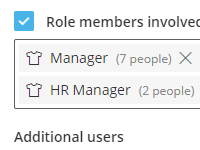
One-click change communication
Summarize changes and send automatic updates to relevant users by email when content is updated.
FAQ – Process Improvement
What do you mean by process improvement?
Process improvement means systematically making a workflow more effective. You reduce waste and errors, clarify responsibilities, and improve outcomes like speed, quality, and customer value.
What are the 5 steps of process improvement?
A simple 5-step version is: (1) define the problem and goal, (2) map the current process, (3) identify root causes, (4) implement improvements, and (5) measure results and standardize what works.
What are the 7 steps of the improvement process?
A practical 7-step cycle is: identify the process, map the “as-is,” analyze inefficiencies, develop strategies, implement changes, monitor KPIs, and standardize the improved way of working.
What is the difference between process improvement and BPR?
Process improvement is usually incremental—refining an existing process step by step. Business process reengineering (BPR) is radical—redesigning a process from scratch. Most organizations use continuous improvement day to day and reserve BPR for processes that are beyond repair.
What are some examples of process improvement?
Common examples include automating repetitive tasks, streamlining approvals, improving quality checkpoints, reducing team handoffs, and building simple KPI dashboards to guide decisions.
What are the pillars of process improvement?
Most organizations succeed when they combine four pillars: clarity (documented processes and roles), capability (skills and methods), measurement (KPIs and feedback), and adoption (tools and routines that make the improved way easy to follow).